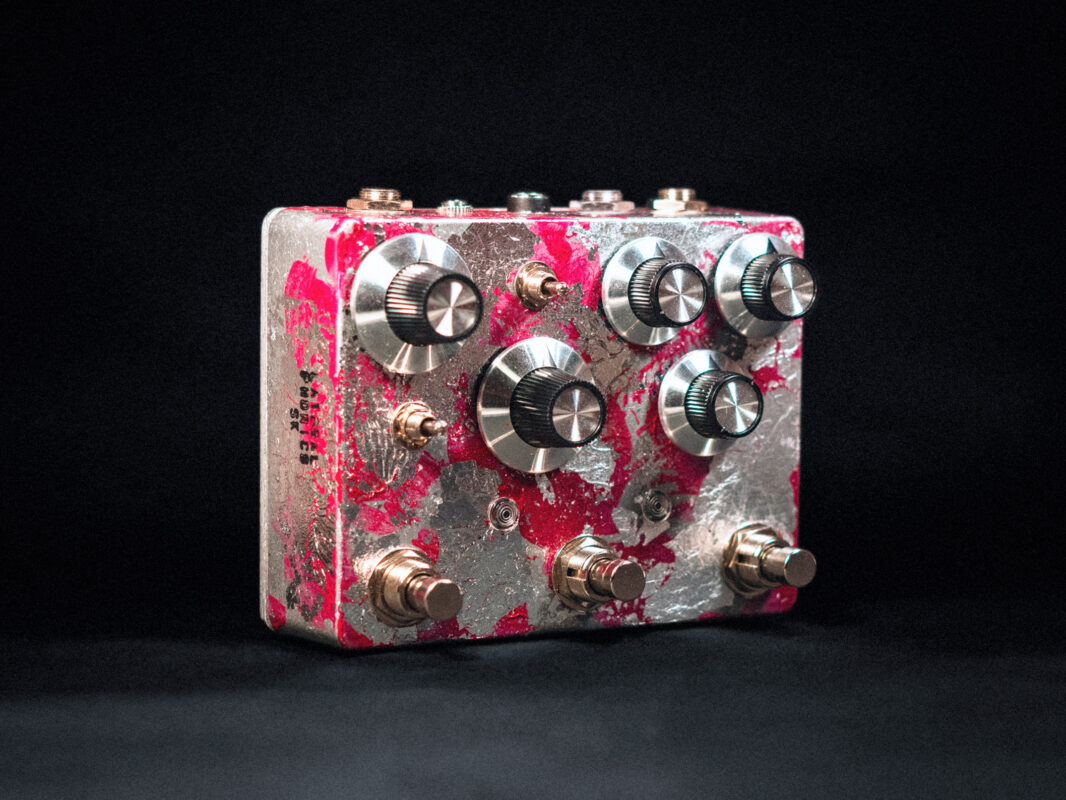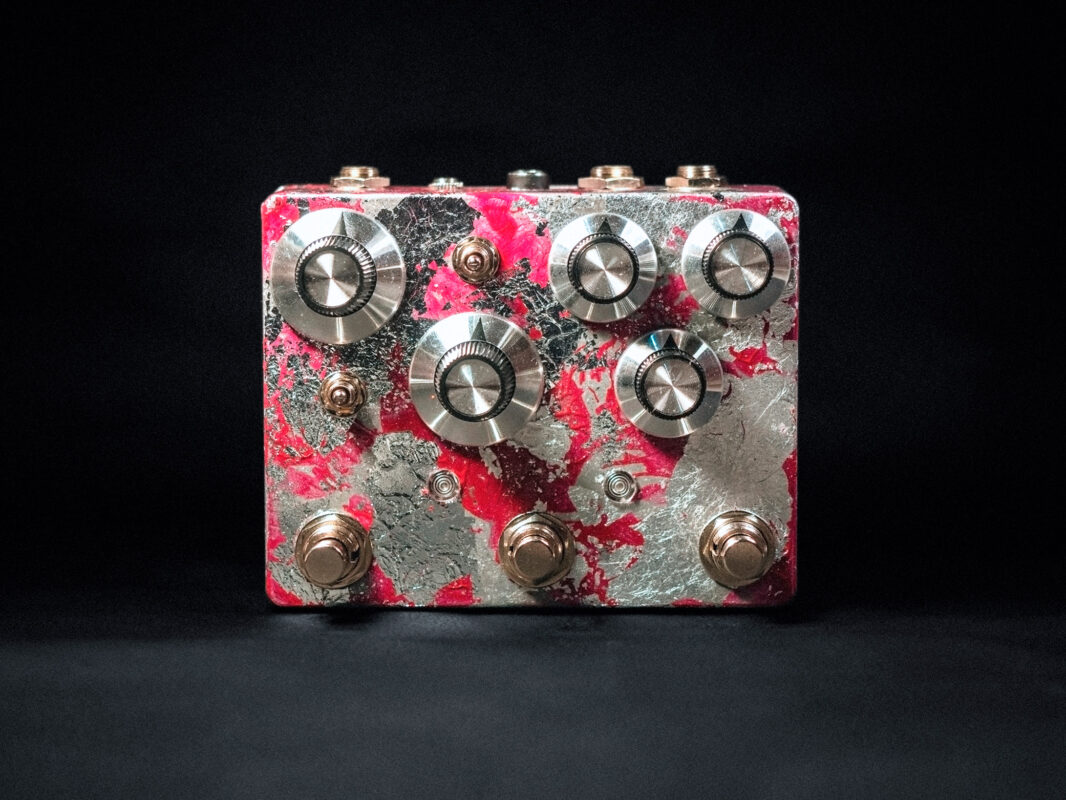
TWO ANALOG ENGINES. ONE DIAL BETWEEN ORDER AND CHAOS.

An all-analog drive box with the authority of a big tube stack behind it: thick, mid-heavy, raw when you push it. Compressed clean through overdrive to full fuzz, with analog octave-up on top.

Then a tunable generator, working as an oscillator, a noise source or a modulator — drones you can tune to your key, walls of noise, synthetic timbres, and the modulation that appears when the generator starts bending the drive circuit itself.

Play one. Play both. They are built to work together, and you can move between them while the note is still ringing.

Built for noise, industrial, experimental and drone. Pulls back for doom, sludge, shoegaze and post-rock.

ENTROPY PEDAL

 
DRIVE · FUZZ · OCTAVE · NOISE · DRONE · MODULATION
 
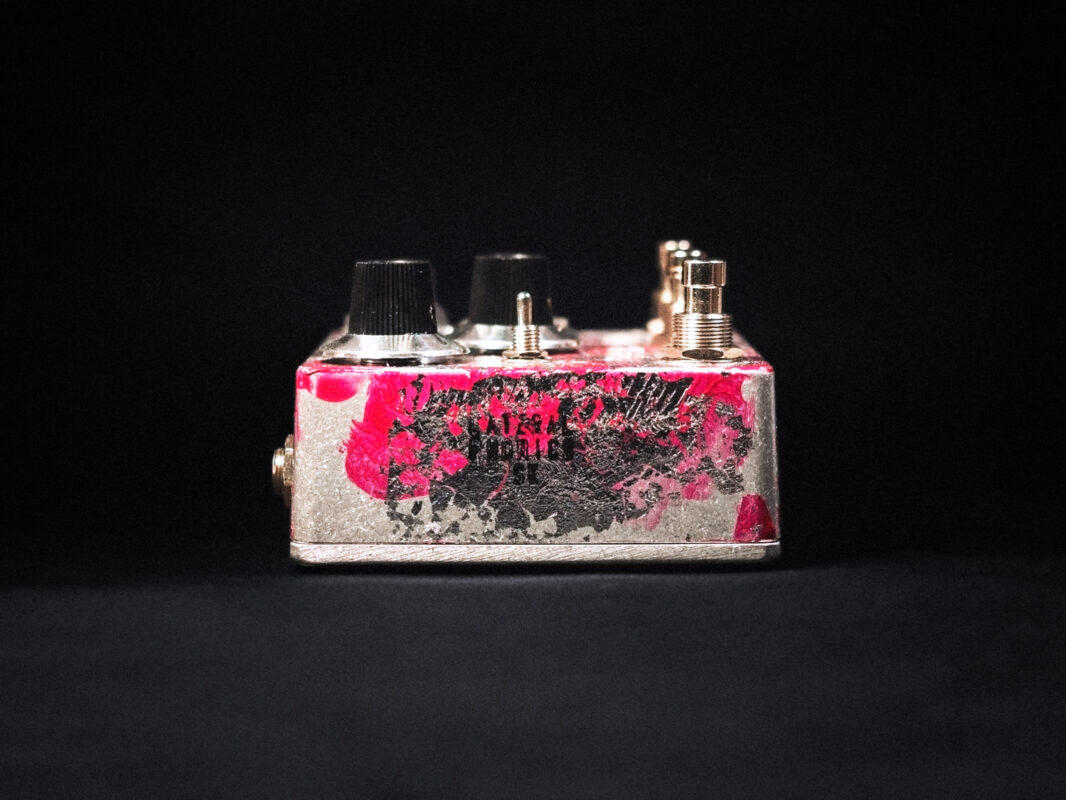
FULLY ANALOG, ORIGINAL DESIGN. BUILT AND PAINTED BY HAND IN FRANCE.
340

ENTROPY PEDAL

 
DRIVE · FUZZ · OCTAVE · NOISE · DRONE · MODULATION
 
FULLY ANALOG, ORIGINAL DESIGN.
BUILT AND PAINTED BY HAND IN FRANCE.
340

STACK IN A BOX

Entropy does not sit in front of an amp. It behaves like one. Thick low end, forward midrange, raw grind on top when you push it. And compression: notes bloom and hold instead of simply getting louder, the way a big rig behaves when it is genuinely working hard. That character is what the rest of this section is built on.

HOW IT RESPONDS

It reacts to your hands. Hit harder and it saturates; ease off and it opens up. Nothing sits at one fixed level. That comes from the JFET stages, which handle saturation and compression, ending in one set for maximum compression, where the clipping happens. Between them a BJT stage boosts and clips to hold the midrange.

MID CUT

One knob, two tonal characters and everything in between. Turn it down and lows and highs rise together while the mids scoop out: a roar underneath, bite on top, room in the middle for a voice or a second guitar, and a more massive, fuzzier character overall. Turn it up for flat and forward, ready to cut through a band.

THE GAIN RANGE

LOW GAIN. Clean, lightly saturated, compressed and transparent. Barely dirty, but already thicker than what went in.

LOW MID GAIN. Compression and clipping build together. Overdrive that stays articulate under chords.

HIGH MID GAIN. A fuzz character arrives: compressed, harmonically rich, and still fully dynamic under your hands.

HIGH GAIN. Either a classic velvety fuzz, or an aggressive mid-focused distortion-fuzz that cuts through any mix.

You do not need the knob to travel this range. Picking harder pushes it up; rolling your guitar volume back pulls it down to a clean tone.

ANALOG OCTAVE UP

Hit the Octave switch and a self-adjusting system rebuilds the circuit around the upper octave. Extra stages engage, components re-tune themselves, gain re-sets. All of it automatic, all of it so the octave tracks cleanly instead of tearing apart the way octave circuits usually do.

What you hear cuts and sparkles. The octave section slices through the signal and lifts it up. The effect is strongest higher up the neck; switch to the neck pickup and roll your tone back and it becomes unmistakable.

Minimum — An almost clean, faintly modulated octave. Moderate — Dense, saturated, still controlled. Maximum — Aggressive octave fuzz with a distinct splitting character.

Precise enough for single-note lines, brutal enough for riffs.

THE SEPARATE CIRCUITS

This is the part that matters if you have been burned before.

In most chaos-capable fuzzes the distortion and the oscillation share one circuit. That is why they are unpredictable, and why they end up staying at home. Entropy is built the other way around. IDLE STATE is a completely separate circuit from CHAOTIC STATE, with its own wide gain range and its own dynamics. Each section runs stably and practically independently of the others.

The result is a fuzz you can gig with, that also happens to contain a chaos engine. Chaos stays on demand. It never bleeds into the core signal, and it never degrades it.

FREQUENCY KNOB

FQ sets the base frequency for all three modes. At the bottom it is a few pulses per second, slow enough to hear as separate clicks and use as rhythm, with no smear on the edges. At the top it passes 1 kHz and becomes a pitched tone you can tune to your key. Everything here follows from where you set it, and moving it while you play is half the fun.

BLEND KNOB

How much of the chaos reaches your amp. A trace of texture behind an otherwise normal tone, two voices sharing the same space, or the generated signal taking over entirely. In modulation settings the same knob becomes your depth control. It is the fastest control on the pedal for making Entropy either polite or completely unrecognisable.

CLEAN OPERATION

Switch a noise mode off and its power supply is physically disconnected, not just re-routed around. Nothing keeps running quietly in the background. No bleed into your clean tone, no hiss, no generator residue, whether the whole pedal is bypassed or only one mode is disabled. Chaos exists when you ask for it, and genuinely does not when you do not.

MODES OF THE CHAOTIC STATE

DRONE. A steady tone held under everything you play, or swept by hand for resonant surges. At mid and high frequencies it takes a real musical pitch: tune it to the key you are in, then drive and shape it with the Drive section. This is what moves Entropy from a noise box to an instrument. And it does more than drone — see Routing.

NOISE. Pink noise modulated by the base frequency and layered onto it. Dense, massive, physical: a signal buried rather than distorted, with FQ warping the texture as you go. Blend decides between grit around the edges and a complete whiteout.

FREQUENCY MODULATION (FM). Your signal comes back synthetic: metallic, inharmonic, still following the frequency you set. Then you stop playing and it keeps going — with no input the system self-oscillates, a convincing feedback from a cranked amp. It does not switch over, it morphs. Whines, screeches, slow sound-morphing.

ROUTING CHAOS

The Routing toggle decides where the processed signal enters. Pre Rout sends it into the front of the drive circuit, so everything is reprocessed and fused together. Post Rout lays it over the top of the tone you have already shaped.

In Drone mode the oscillator generates its own tone, and its voltage acts directly on the drive stages your signal passes through. The generator physically bends the circuit.

At low frequency: Pre Rout → pitch wobble → Vibrato; Post Rout → volume dips → Tremolo. At high frequency: both routings → Ring modulation. Two frequencies grinding against each other rather than harmonising: bell-like, metallic, inharmonic.

Here BLEND becomes depth and FQ becomes rate. Drop the frequency far enough and it turns percussive: patterns you play against rather than through. Engage the octave and the ring modulation changes character entirely. Same controls, a different instrument.

CONTROL BEYOND THE KNOBS

Your guitar volume, in FM mode. Roll it back and autonomous oscillation rises to meet you. The quieter you get, the more the pedal starts playing itself, and a slow volume sweep becomes a full transition from clean signal to synthetic texture.

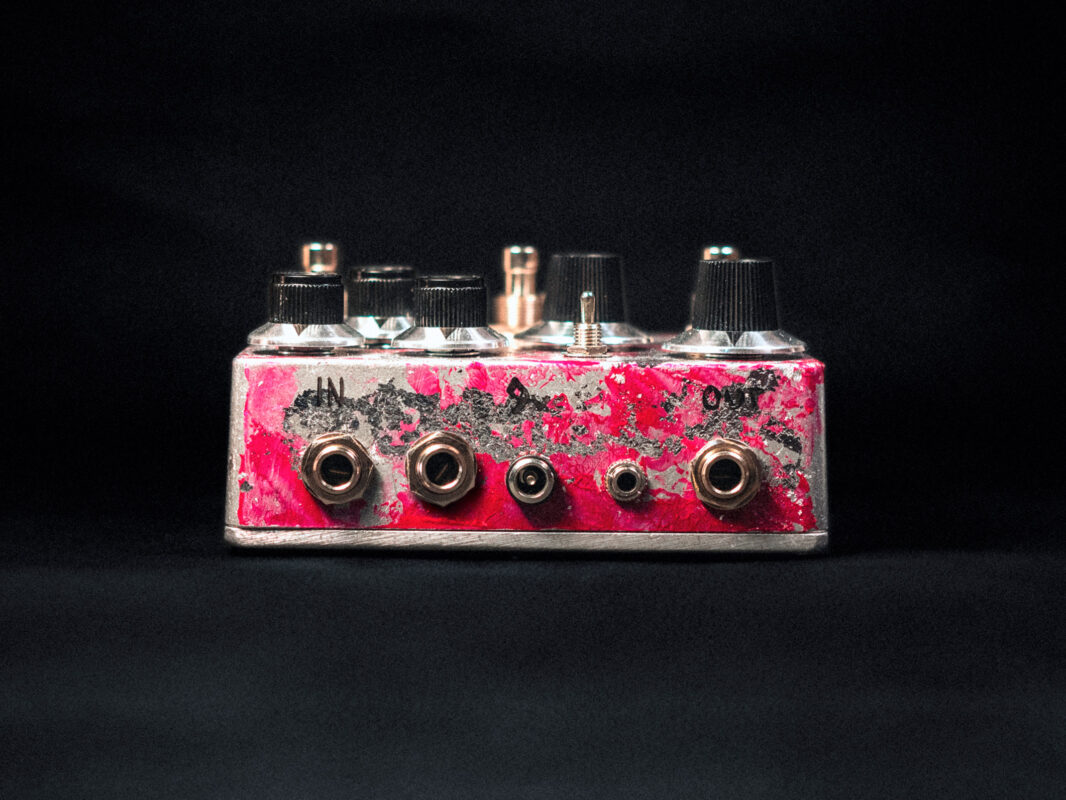
An expression pedal. The EXP input puts oscillator frequency under your foot, from 0 Hz and completely silent up to around 1.2 kHz. Chaos scaled from nothing to everything, live, without bending down. (Use a standard TRS expression pedal.)

Momentary footswitches. Hold a switch for 10 seconds and it becomes momentary: chaos exists only while your foot is down. Two short presses, a long hold, release on the blink, and it latches again.

A tremolo in front. Rhythmic volume changes become cyclical modulation behaviour, and automatic pulsing turns into structured, evolving patterns you still steer with depth and rate.

| Review and Demo |